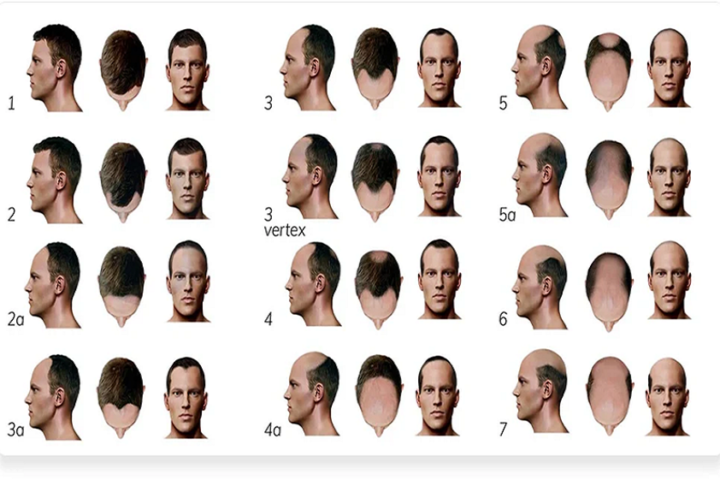
Ask most men when they first noticed their hair thinning, and you’ll usually get an oddly specific memory: a photo someone took from above, a comment from a barber, a hairline that suddenly looked different in the bathroom mirror than it had a year before. What follows next is often a scramble through pharmacy shelves for whatever promises the fastest fix.
Ayurveda takes a slower, and arguably more honest, view of male hair loss treatment. It doesn’t treat thinning as a cosmetic emergency to be masked, but as a signal that something in the body’s balance has shifted and that signal is worth listening to before reaching for a quick patch.
What Ayurveda Says Is Actually Happening
As per modern dermatology, male pattern hair loss is typically linked to genetic sensitivity to DHT. DHT (dihydrotestosterone) is a byproduct of testosterone that shrinks hair follicles over time. Ayurveda arrived at a related idea centuries earlier through a different lens: aggravated Pitta and Vata doshas disrupting the scalp’s natural nourishment cycle, often worsened by stress, poor sleep, and inflammatory diets.
Read More: The Power of Bhringraj Hair Oil: How It Helps Control Hair Fall
The two frameworks describe overlapping territory from different directions: one hormonal, and one energetic. But both point toward the same conclusion. Hair loss in men is rarely random, and it’s rarely just about the scalp itself. This is the reason why many modern hair wellness brands, like HairSmart, lean on Ayurveda alongside clinical science rather than choosing one over the other; treating the follicle and the underlying imbalance tends to outperform treating either alone.
The Herbs Ayurvedic Medicine Reaches for First
A few botanicals appear consistently across Ayurvedic texts specifically for male hair loss. And these have been part of male hair loss solutions for ages, long before minoxidil or finasteride were introduced for hair loss. The top botanicals that are clinically proven to have DHT-inhibiting properties are:
- Saw Palmetto: valued in both Ayurvedic and modern herbal medicine for its association with naturally regulating DHT activity at the follicle.
- Stinging Nettle Root: traditionally used to help block the enzyme that converts testosterone into DHT, working alongside Saw Palmetto rather than duplicating it.
- Pumpkin Seed Oil: rich in phytosterols associated with supporting healthy DHT levels, while also delivering nutrients that benefit the scalp directly.
- Green Tea Extract: brings antioxidant support that helps protect follicles from oxidative stress, a secondary factor that can accelerate thinning already driven by DHT.
None of these work overnight, and Ayurvedic tradition has never pretended otherwise. It addresses the follicle, calms the inflammation, and supports the hormonal balance driving the loss, rather than chasing one symptom in isolation.
Read More: Ayurvedic Hair Care: Natural Ingredients for Vibrant and Healthy Hair
Consistency Is the Actual Treatment
If there’s one thing men trying to treat hair loss consistently get wrong, it’s abandoning a routine after six weeks because the mirror hasn’t changed dramatically. Hair grows in cycles that take months, not days, to show visible results, a timeline Ayurveda has always been upfront about, even when it’s a harder sell than a bottle promising overnight results.
Treating hair loss is a whole-body pattern, not a single scalp problem, and brands like HairSmart’s core philosophy is based on the same. Real hair recovery takes the body’s whole wellness into account, not just the strands you can see. So be consistent and keep up with the hair loss solution for at least 6 months.